HVAC
AC Installation in Union County & Central NJ
Central air conditioning installation and replacement, sized for your home rather than copied from the old unit's label.
Replacing central air, or adding it to a house that has never had it, comes down to three things: the size of the system, the ductwork it pushes air through, and how carefully the refrigerant side is installed. Our own technicians look at the house, the ducts and the electrical supply before recommending any equipment, and explain your options in plain terms. We handle permits and inspections where they are required, and financing is available for larger projects.
Common problems and how we handle them
Should the new AC be the same size as the old one?
Not automatically, since the old unit may never have been sized correctly. Cooling size depends heavily on things a heating calculation weighs less, above all how much window glass takes the afternoon sun and how much moisture the system has to pull out of the air. An air conditioner that is too large reaches the thermostat setting quickly, before the coil has run long enough to remove much humidity, so rooms feel cool but clammy and the compressor wears from constant restarts. One that is too small cannot hold the thermostat setting on a humid heat-wave afternoon no matter how long it runs. The old model number is a useful point of comparison, not the answer.
Can my existing ductwork handle a new system?
If the far bedrooms were weak or a return grille whistled with the old system, a new condenser will not fix it, because the ducts largely decide how much air reaches each room. Ducts that are undersized, crushed, disconnected or leaking in an attic or crawl space will hold back even a well-sized new unit, and the result looks like equipment trouble, such as a second floor that never catches up. We look at the supply and return layout, the size of the return and how hard the blower has to work to move air. If the ducts need work, you hear about it before installation, not after the new system disappoints.
Do I have to replace the indoor coil if only the outdoor unit is old?
In most cases the outdoor condenser and the indoor evaporator coil should be replaced together. They are designed and rated as a matched pair, and current equipment runs on different refrigerants than many older systems, so pairing an old coil with a new condenser can cut efficiency and lead to early failures. The copper lines that connect them also need a look. Sometimes they can be flushed and reused, and sometimes their size or condition makes new lines the better choice. We tell you which applies to your house and why.
What if my house has no ductwork for central air?
Houses heated by a boiler or electric baseboard often have no ducts at all, and there are two common ways to add cooling. An air handler can go in the attic with new ductwork run down to the rooms below, which works well when the attic has headroom and a clear path to each room. Ductless mini-splits skip the ducts entirely and cool room by room. The right answer depends on your attic, your floor plan and which rooms you actually want cooled, and we walk through both options before you commit.
How the job works
- We size the new system from your home's square footage and layout rather than copying the size of the old unit.
- We inspect the existing ductwork, the return air path, the electrical supply and the route for the condensate drain before recommending equipment.
- Once you choose a system, we put the full installation price in writing and apply for the permit where one is required.
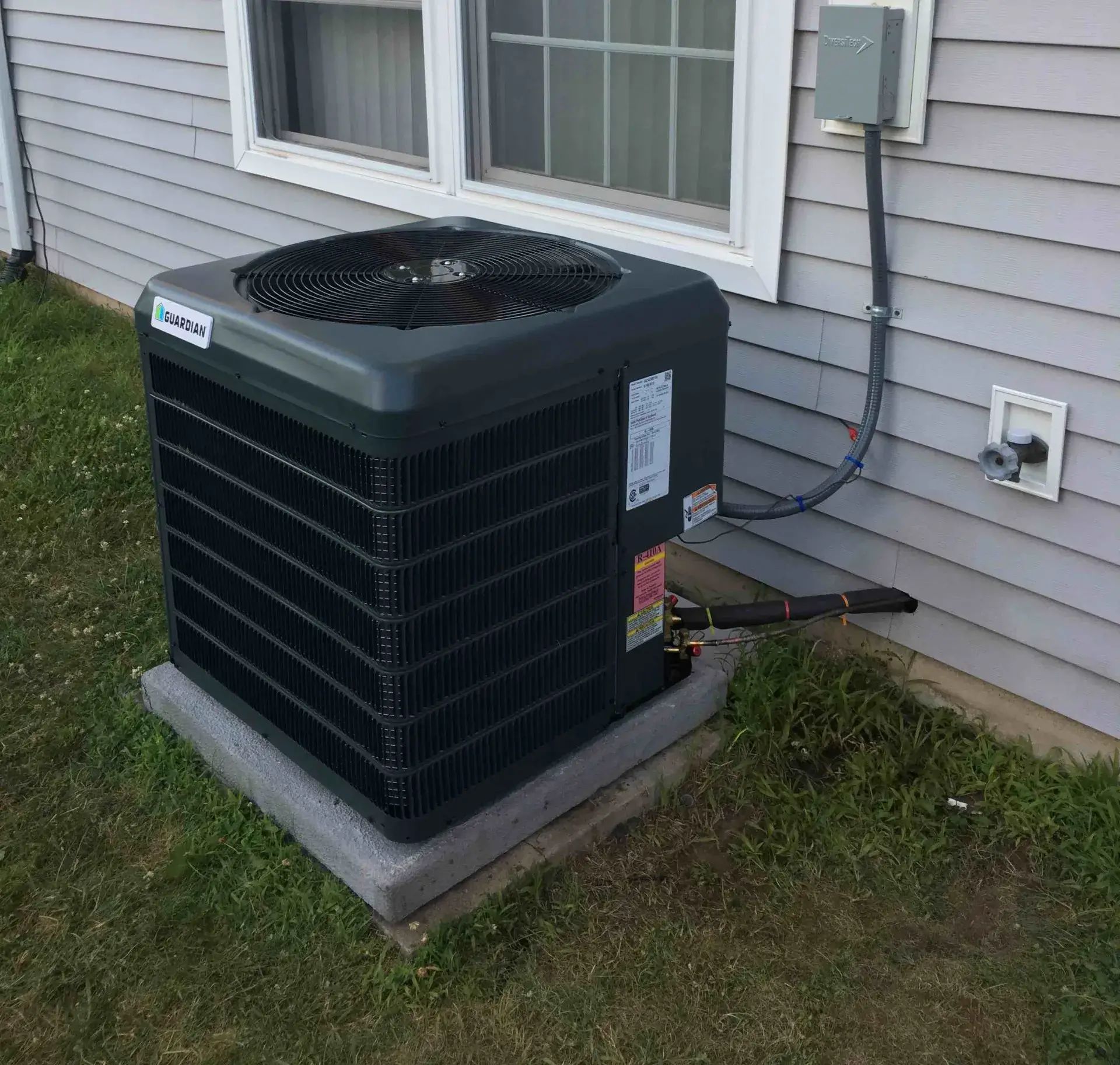
- The old condenser and indoor coil come out, the new condenser goes on a level pad, and the matched coil, refrigerant lines and electrical disconnect are connected.
- We pressure-test the refrigerant lines, pull a deep vacuum to clear out air and moisture, and then release or adjust the refrigerant charge.
- We start the system, confirm the charge and airflow match the equipment specifications, test the drain and its safety float switch, and set up the thermostat with you.
Cost of AC installation
The biggest price factors are the capacity and efficiency rating of the equipment, whether the indoor coil and refrigerant lines are replaced, and how much duct or electrical work the house needs. Attic air handlers and tight access add labor, and so does removing old equipment from hard-to-reach spots. After the site visit you receive a written price covering the full job, and nothing starts until you approve it.
Why homeowners call Vanguard for AC installation
- Licensed and insured. We work under NJ Master Plumber license NJMPL 13344 and HVACR license 19HC00609600, and every job is done by our own technicians, never a subcontractor.
- Upfront pricing, free estimates on most jobs. You approve a written price before work begins. No surprise line items when the job is finished.
- 4.9 stars across 556+ Google reviews. Read what customers say.
- Answered 24/7. Our phone is answered around the clock, including holidays.
Related HVAC services
Areas we serve
We provide AC installation throughout Union, Middlesex, Somerset, and Essex counties, including:
AC Installation questions
What does SEER2 mean on a new air conditioner?
SEER2 is the current efficiency rating for central air conditioners and heat pumps. It replaced the older SEER rating and uses a test that better reflects the resistance of real ductwork, so SEER2 figures run somewhat lower than SEER figures for the same equipment. A higher rating means less electricity for the same cooling. Whether a higher-rated unit pays for itself depends on how much you run the AC and how long you plan to stay in the house.
Should I replace my furnace at the same time as the AC?
Not always, but it is worth considering when both are older. The furnace blower is what pushes air across the AC coil, and a new air conditioner's efficiency rating assumes a compatible blower. Replacing both together means one installation and equipment designed to work as a set. If your furnace is in good shape, a new AC on its own can be the right call, and we will tell you so.
Where can the outdoor unit go?
The condenser needs a level base, open space around it for airflow and service access, and a spot where it will not sit under a roof drip line or blow hot air at a window or patio. It also should be close enough to the indoor coil for a reasonable refrigerant line run, with an electrical disconnect switch nearby. We plan the location with you before installation day.
What should I compare between two AC installation quotes?
Check that both quotes cover the same work: a new indoor coil, new or flushed refrigerant lines, a pad, the electrical disconnect, the condensate drain, permits, and hauling away the old equipment. Then ask how each contractor sized the system. A quote that simply repeats the old unit's size without any measurements, or one that leaves out the coil, may look cheaper but is not the same job.
Ready to Get It Fixed?
Call or email us. We'll get back to you fast.