Plumbing
Fixture Installation in Union County & Central NJ
Expert installation of sinks, toilets, faucets, bathtubs, showers, and other plumbing fixtures.
A new faucet or toilet looks like a simple swap until the old one comes out and the shutoff will not close, the flange underneath is cracked, or the new fixture does not line up with the pipes in the wall. We install sinks, faucets, toilets, bathtubs and showers, whether you are replacing one worn fixture or finishing a full remodel. Our licensed plumbers confirm that the new piece fits the existing connections before starting and point out anything hidden that should be fixed while it is exposed. Every fixture is installed by our own technicians.
Common problems and how we handle them
Which faucets fit my existing sink or countertop?
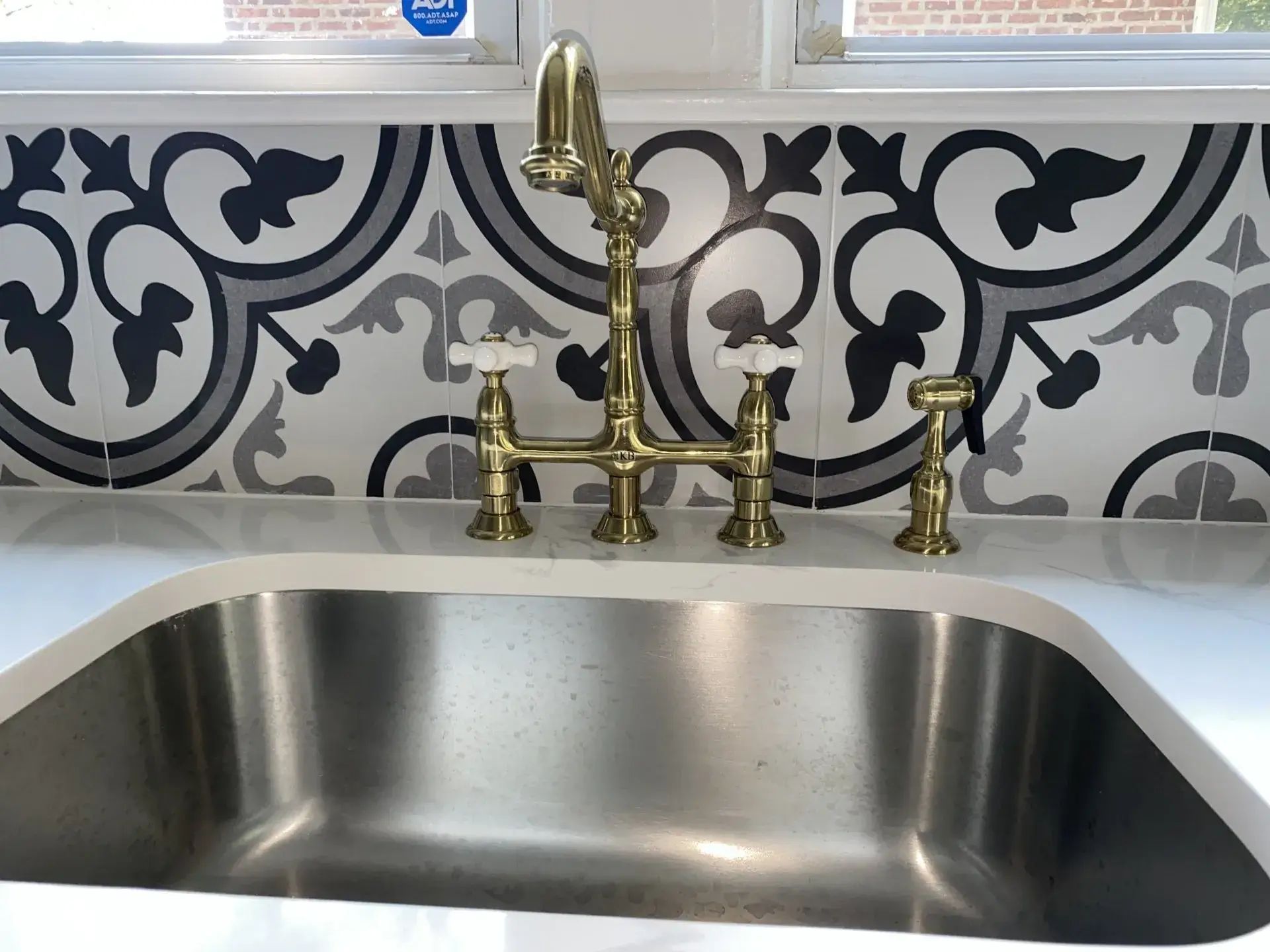
The hole pattern decides it. Bathroom sinks are drilled for a single-hole faucet, a centerset with the handles close to the spout, or a widespread set with separate handles spaced farther apart. A single-hole faucet can often cover extra holes with a deck plate, but a widespread faucet will not fit a sink drilled for a centerset. Kitchen sinks may add holes for a sprayer, soap dispenser or filter tap. Count the holes, measure their spacing, and check how thick the counter is before you buy.
What makes a toilet rock or leak at the base?
A toilet has to sit flat and tight, with the wax ring or seal pressed evenly onto the floor flange. When the flange sits too far below a new floor, is cracked, or has rusted through, the seal cannot hold and the bowl moves. Uneven tile produces the same rocking. Every small shift weakens the seal further, and water from each flush can soak into the subfloor out of sight. The fix is to repair or raise the flange, shim the bowl level, and reset it with a new seal.
What has to change when a tub becomes a walk-in shower?
More than the fixture. A shower drain usually sits in a different spot than the tub drain, so the trap moves, and it often needs a larger drain line. The valve moves up the wall to shower height, and it should be a pressure-balancing or thermostatic type that holds temperature steady when a toilet is flushed elsewhere in the house. The floor needs a sloped, waterproof base under the finish. Settling these details before demolition keeps the project from stalling halfway through.
Should old shutoff valves be replaced with the fixture?
Usually, yes. Older multi-turn stop valves under sinks and toilets tend to seize, or start dripping at the stem, once they are turned after years in one position. Since the water is already off for the fixture change, replacing them adds little work, and it means the next leak can be stopped at that one fixture instead of at the main. Worn supply lines, especially older plastic or rubber ones, are worth swapping at the same visit.
How the job works
- Before the old fixture comes out, the new one's rough-in dimensions are checked against your existing drain and supply locations.
- With the water off, the old fixture comes out and the flange, drain, trap, stop valves and supply lines behind it are inspected.
- Any hidden problem is shown to you and added to the written price, and nothing extra is done without your approval.
- The new fixture is set level, connected and sealed following the manufacturer's instructions.
- Water is run through every connection, toilets are filled and flushed, and the location of the fixture's own shutoff valve is pointed out to you.
Cost of fixture installation
A straight swap, where the new fixture matches the existing drain and supply locations, is the simplest case. Moving a drain, relocating a valve, or opening walls and flooring for a tub or shower adds labor and material. Corroded flanges, seized stops and worn traps discovered during removal add to it as well. The installation price is written down and agreed before a wrench is turned, and any extra repair is priced in writing first too.
Why homeowners call Vanguard for fixture installation
- Licensed and insured. We work under NJ Master Plumber license NJMPL 13344 and HVACR license 19HC00609600, and every job is done by our own technicians, never a subcontractor.
- Upfront pricing, free estimates on most jobs. You approve a written price before work begins. No surprise line items when the job is finished.
- 4.9 stars across 556+ Google reviews. Read what customers say.
- Answered 24/7. Our phone is answered around the clock, including holidays.
Related plumbing services
Areas we serve
We provide fixture installation throughout Union, Middlesex, Somerset, and Essex counties, including:
Fixture Installation questions
What is a toilet rough-in, and why does it matter?
The rough-in is the distance from the finished wall behind the toilet to the center of the drain, usually measured to the floor bolts. Most homes use a 12-inch rough-in, but 10-inch and 14-inch layouts exist, and a toilet made for the wrong one will not fit. Bowl shape matters too, since an elongated bowl reaches farther into the room than a round one.
Do shower handles from other brands fit my existing valve?
Rarely. Shower trim, meaning the handle and faceplate, is usually made for one manufacturer's valve body and often for one model line. Switching to a different brand or style typically means replacing the valve itself, which requires opening the wall behind or around the shower. Finding out which valve you have before shopping for new trim can save a lot of trouble and expense.
What causes weak flow from a brand-new faucet?
Debris, most of the time. Shutting the water off and turning it back on can knock loose scale from older pipes, and those flakes collect in the aerator screen or the cartridge of the new faucet. Unscrew the aerator at the tip of the spout, rinse it, and put it back. Newer faucets are also built to lower maximum flow rates than older models, so some difference is normal. Flow that stays weak after cleaning is worth a call.
When does the plumber come in during a bathroom remodel?
Usually at two stages. The rough-in visit comes after demolition and framing, while the walls are open, to move drains and supply lines and set the shower valve at the right depth for the planned wall finish. After the tile, vanity and flooring are done, a finish visit sets the toilet, sink, faucet and shower trim. Letting your plumber know what tile or surround is going in helps get that valve depth right the first time.
Ready to Get It Fixed?
Call or email us. We'll get back to you fast.